Why There's a River in the Name
Two nouns. Most people read the first one as scenery.
It isn't. The river is the reason everything else here is the way it is, including the roots.
What it actually is
The St. Marys starts in the Okefenokee Swamp, about twenty miles north of our gate.
In July of 2026, after a nomination forty-four years in the making, the Okefenokee became a UNESCO World Heritage Site — Georgia's first. It protects the largest lowland freshwater peatland in the subtropical zone anywhere on earth, a place UNESCO describes as shaped by "alternating fire and rainfall." More than twelve hundred species live in it, alligators among them, over peat beds holding thousands of years of environmental record. The name is older than the paperwork: Okefenokee is Hitchiti, a Muskogean language, and means roughly land of trembling earth.
The swamp drains two ways. About ninety percent goes southwest, becomes the Suwannee, and ends in the Gulf. The rest slips out the southeast corner and comes down here.
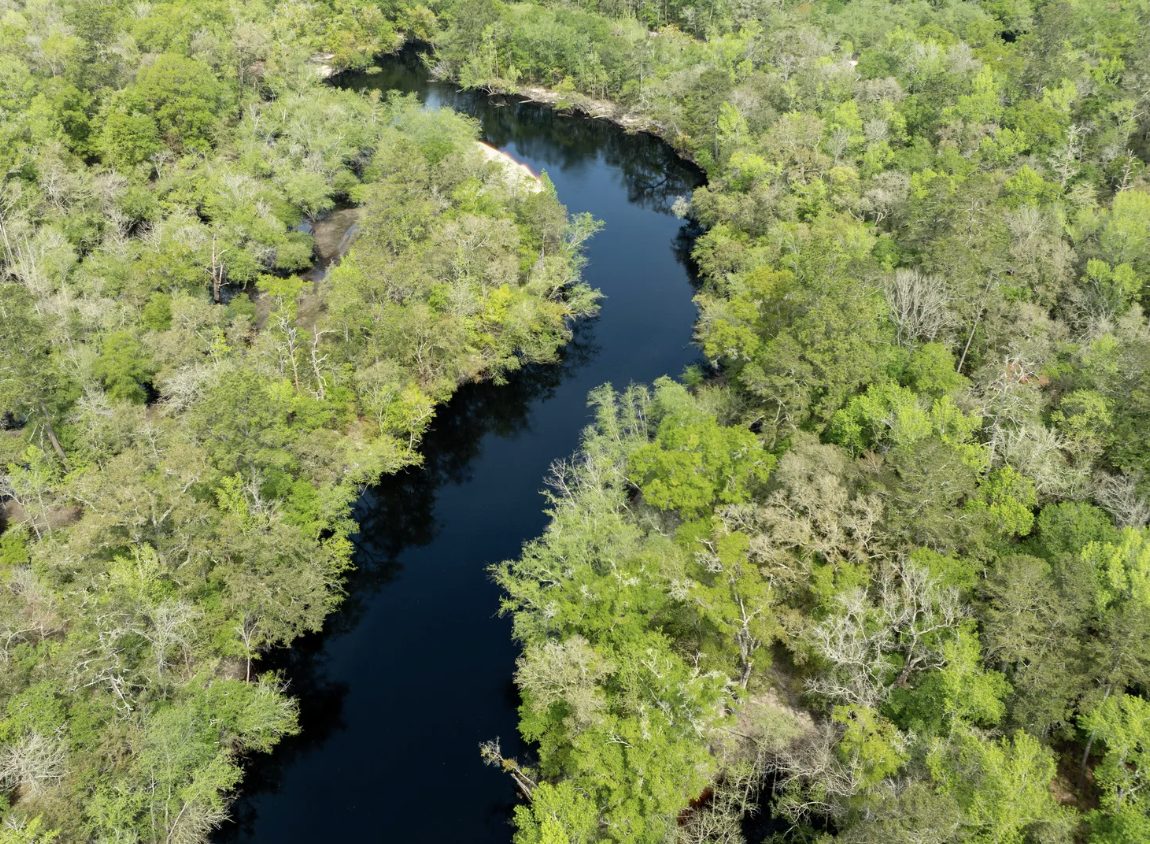
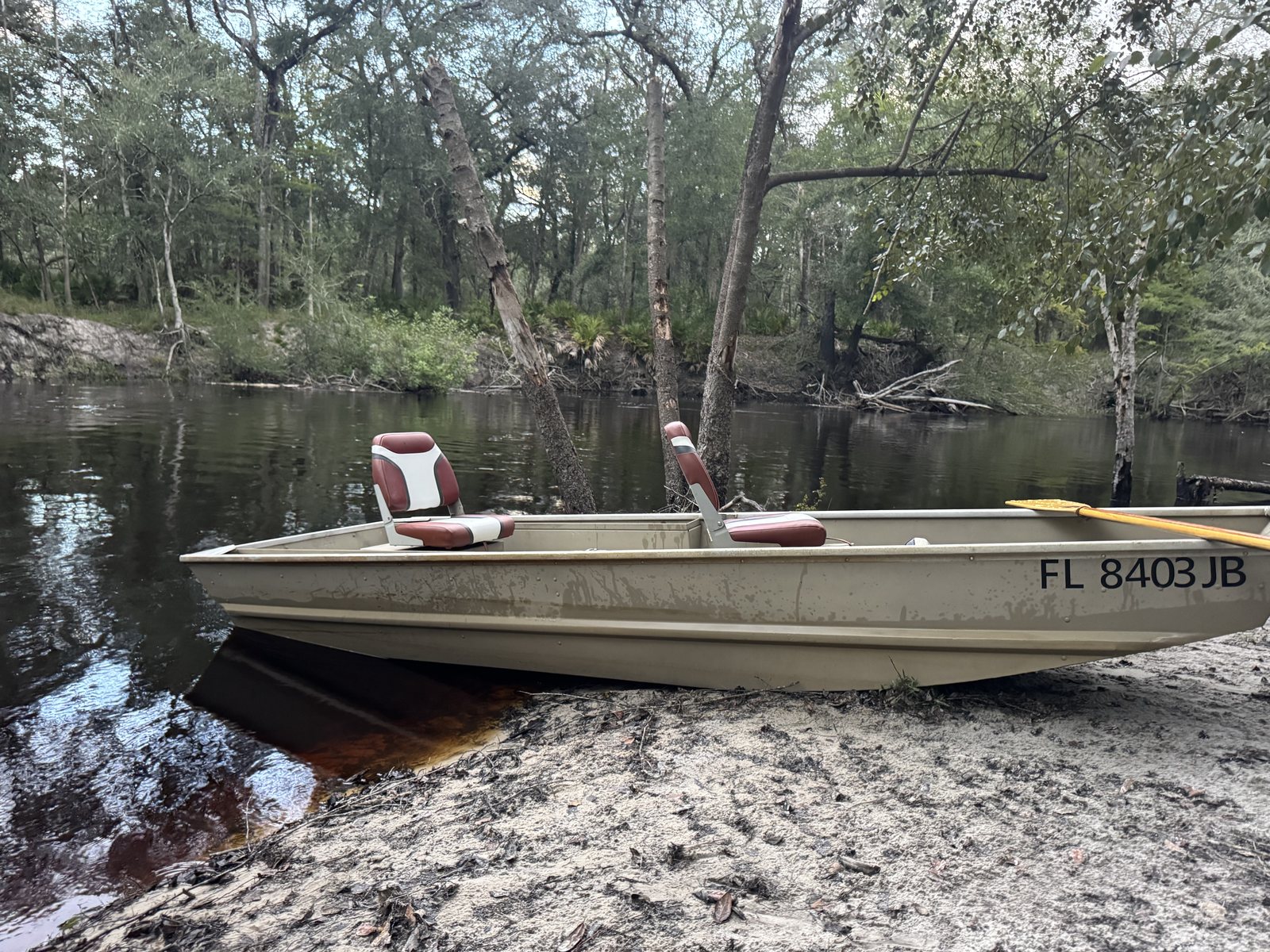
That water is the color of strong tea because it is, functionally, tea — steeped through peat and cypress root, filtered the whole distance by swamp and sand. People assume dark water is dirty. The St. Marys is among the cleanest rivers in the Southeast, and there is not one dam along its length.
Then it does something strange. South out of the swamp, east, north past our western property line, east again, and into the Atlantic a hundred and thirty river miles later — at a point forty miles from where it started. It doesn't take the short way. It goes its own way.
And the middle of that channel is the Florida–Georgia state line. We own 1.2 miles of a border between two states, which is a strange thing to say about your own backyard.
What it does to the land
Between the ranch house and the water, this property drops about fifty-five feet.
We grew up in Colorado, where fifty-five feet is what you gain walking to the mailbox. Here it's the whole story — the distance between high, sandy ground that ten thousand years of rain has rinsed clean of nutrients, and low ground that spends part of every year underwater. You cross the entire range in about fifteen minutes.
That sand is poor on its own and entirely workable. Savannah's flower and vegetable rows near the house are producing already. The answer was compost, and a lot of it.
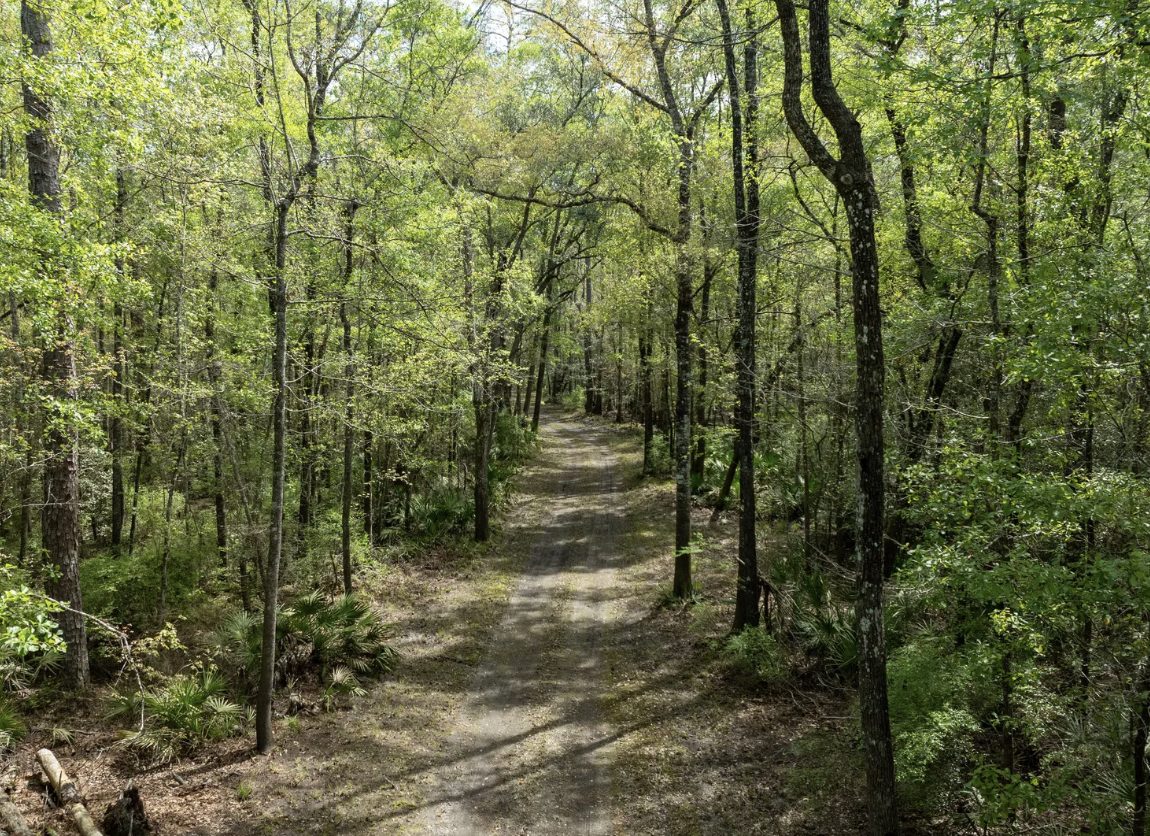
I used to describe the change from high ground to low as a line you cross in four steps. Then I walked it enough times to notice that isn't what happens. The saw palmetto comes with you nearly the whole way — it's still there thirty feet from the water. What changes is above it and underneath it. The pines hand off to cypress and ash. The white sand goes tan, then dark, then soft. You're well into the floodplain before anything announces it.
The river doesn't draw a border across this property. It grades into it, and everything alive here is arranged along that grade — pine and palmetto on the high ground because they tolerate both extremes, cypress on the low because little else can, the deer working the middle. The floodplain soil is black and rich because the river built it, one flood at a time, out of what it carried down from the swamp.
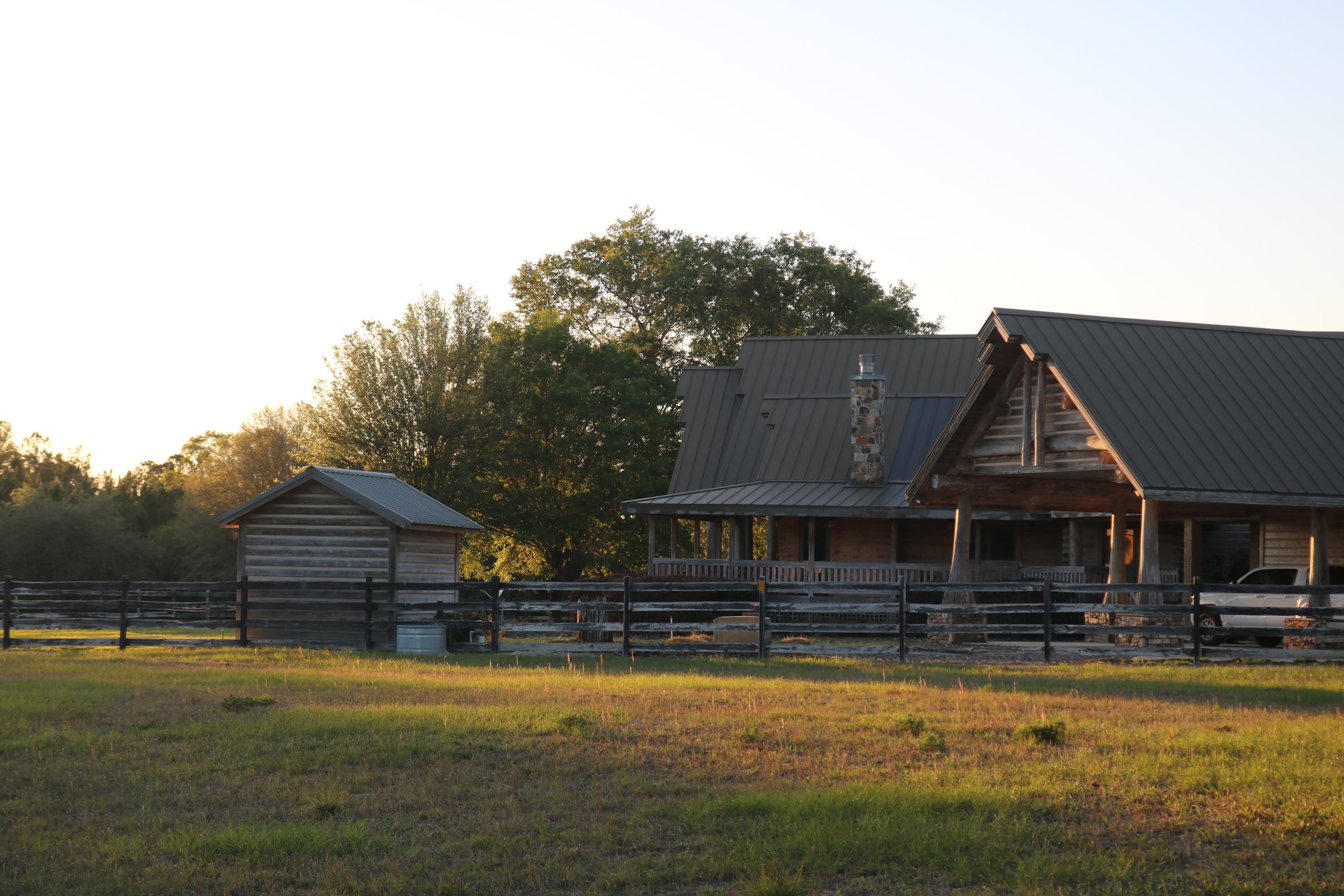
The house itself is cypress, cut from a floodplain like ours because cypress heartwood barely rots. Even the building is downstream of the river in a literal sense.
That's the part that took me a while to see. The roots are here because of the river. Not beside it. Because of it.
The other half of the name
Roots is the easy half to explain, and the deeper one.
It's the live oaks and the 246 acres and the pasture Leon Perpall cleared eighteen years before we got here. It's Savannah's flower and vegetable farm, already in the ground and already producing. It's my son-in-law Abe, who guides here. It's my wife and my daughters. It's the fact that this is a working ranch and not a resort with a theme.
And it's the part we don't plant ourselves. A team finally has the conversation at the fire they'd been circling for a year. A grandson catches his first fish off a bank in a river nobody in the family had heard of. Those put down roots too, and they're the ones we have the least control over and care about the most.
Roots are what stay.
A river is the opposite. It's the one thing here that is genuinely different every day — different height, different color, different speed, new sandbars after a big year. You can't stand in the same one twice. Very old observation. Still true at our landing.
So the name holds two things that don't obviously belong together. Something that stays and something that never does, in one place, each making the other possible.
We weren't being clever. We named it after the two things we could see.
Why it matters if you're coming here
A river won't solve anything for you. What it reliably does is slow you down, and being slowed down is how you notice what you'd otherwise walk past.
I've watched enough groups go down to the water now to see the pattern. People arrive talking — retreat groups arrive mid-session, still finishing the sentence they started in the room. We walk west, downhill, and somewhere in the middle they stop. Not because anyone asks. The light changes, the temperature drops as the canopy closes, and there's suddenly something worth looking at that isn't a slide.
Then we stand at the water for two minutes without speaking. Two minutes is far longer than it sounds. And everyone walks back up the hill talking the whole way — and that conversation, the one on the way back, is the one people quote to me months later.
If you're here for a weekend, the river is white sand with nobody on it, a canoe, and a fire on the bank when the light goes. If you're bringing a team, it's the thing that does the work no facilitator can do: it makes a group of people be quiet together for a minute before you ask them to be honest.
Either way it's the same water. It came out of a swamp the world took forty-four years to recognize, it has another sixty miles to run before the ocean, and it will be different tomorrow.
That's why it's first in the name.
Planning a retreat, an offsite, or a weekend at the ranch? Tell us your dates
Ben Wright
Co-Founder, River & Roots Ranch